

Electrical Installation Works
Electrical Services
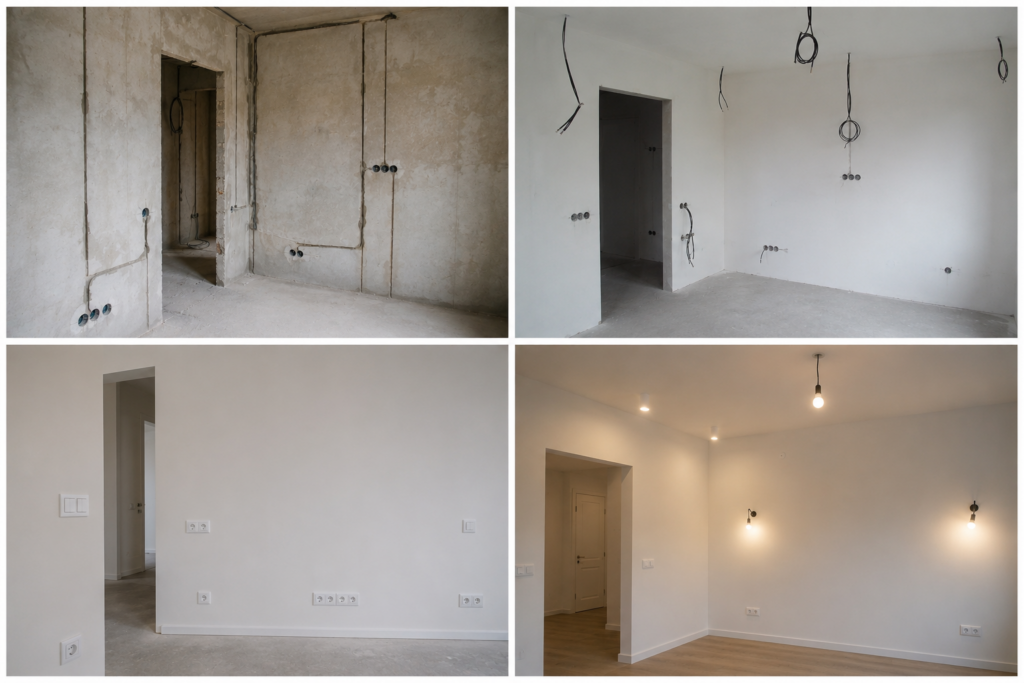
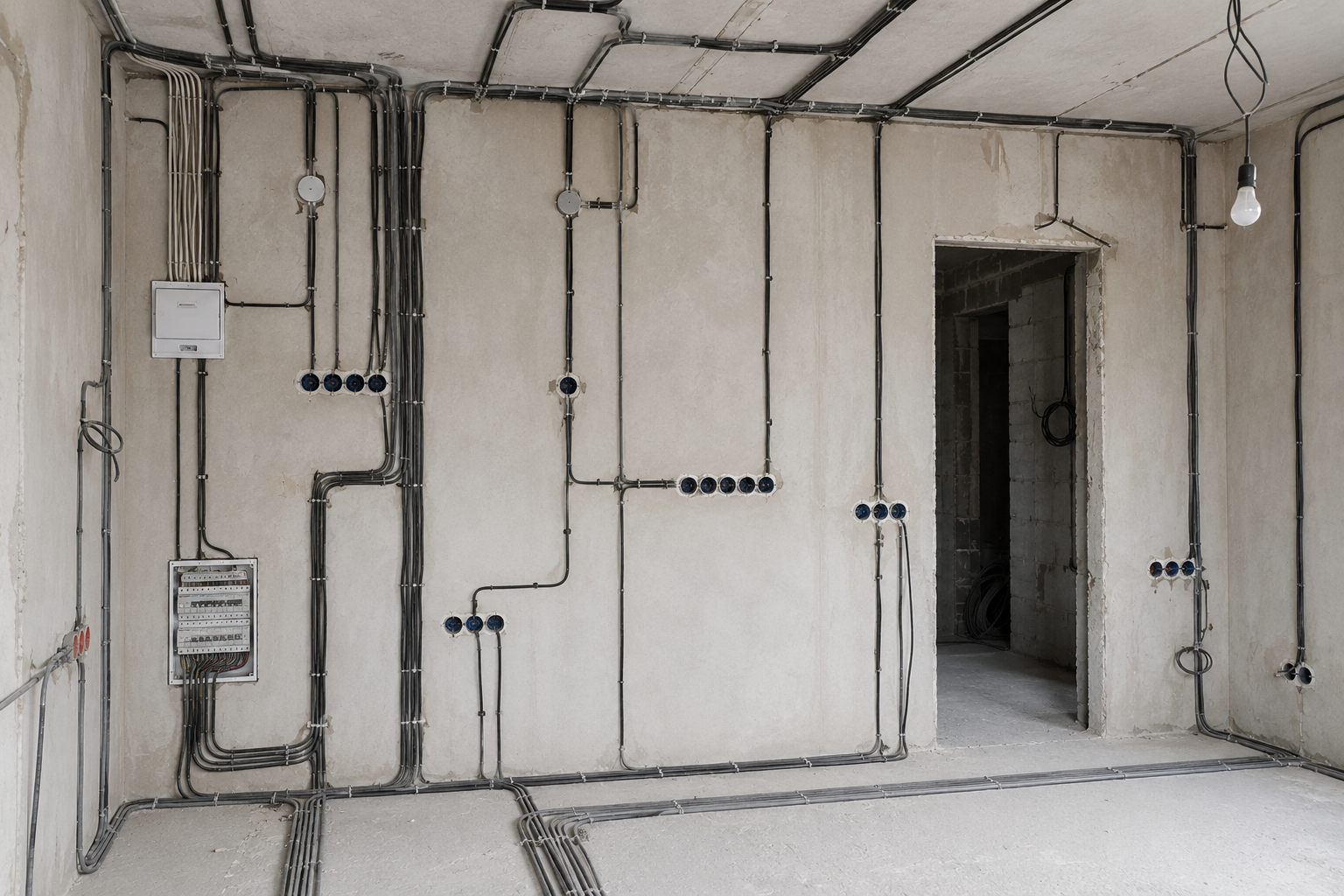
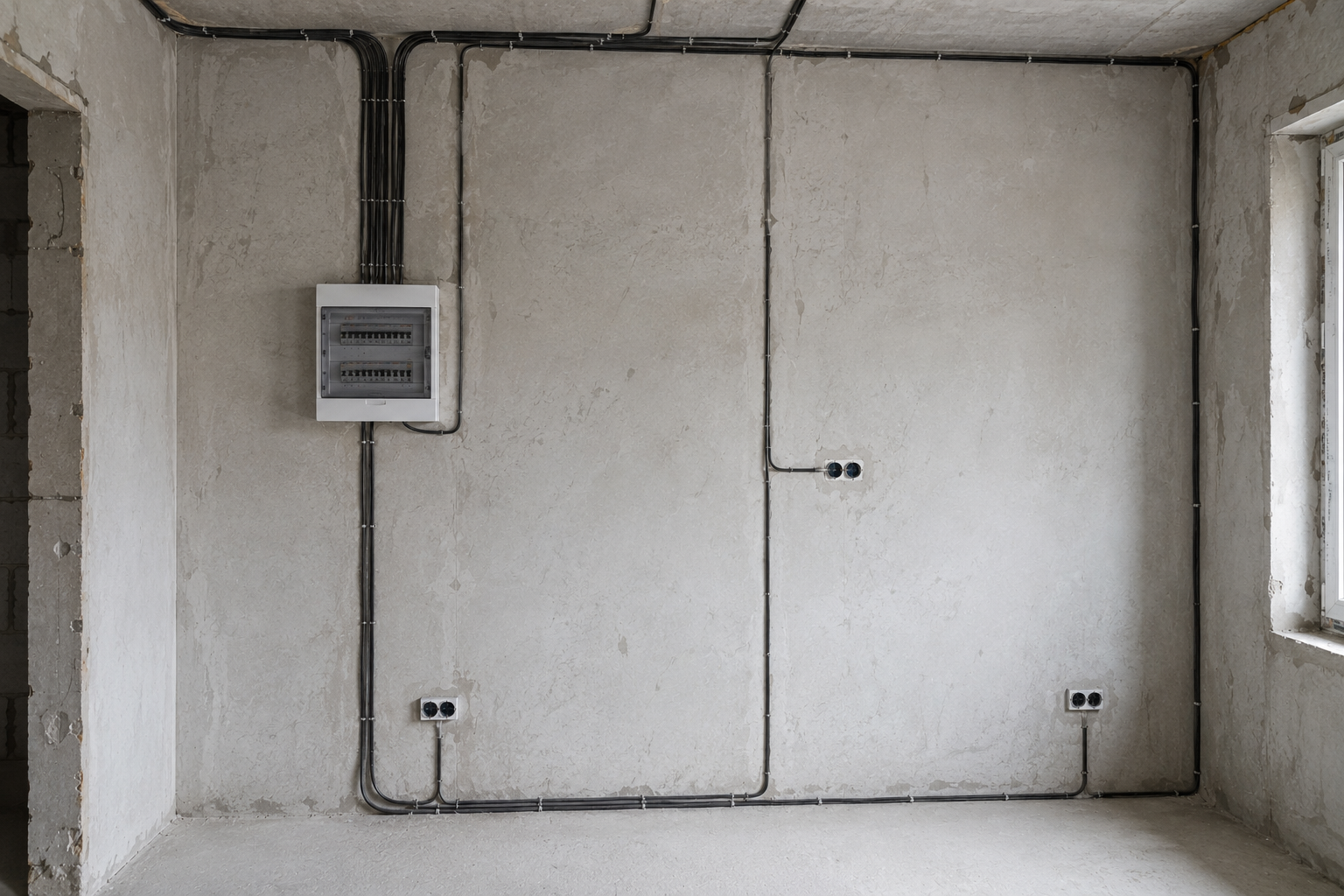
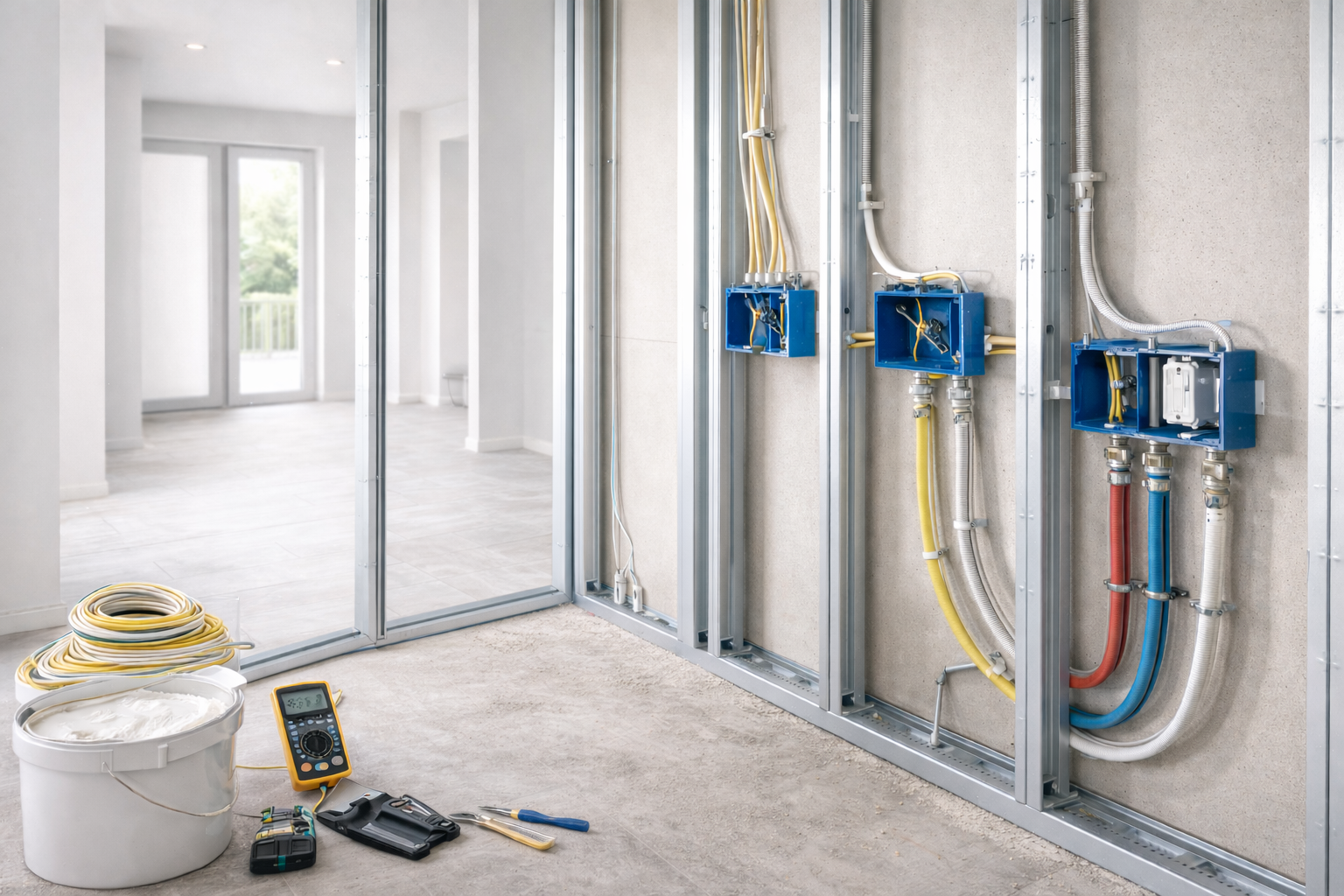
Many people believe that some electrical tasks can be done independently, but mistakes in wiring may lead to short circuits, overheating and serious consequences. For this reason, electrical installation work requires accurate calculations, proper planning and strict compliance with safety regulations. We provide a full range of services: cable routing, installation of sockets and switches, electrical panels, lighting systems and household equipment connection. We also perform electrical installation works in apartments during renovation and remodeling projects.
Special attention is paid to material selection and proper load distribution. High-quality cables, circuit breakers and professional installation ensure reliable and long-lasting system performance. Our specialists provide electrical installation services according to the property requirements and customer needs while following all construction and technical standards.
Many customers are interested in how much electrical installation works cost. The final price depends on the property size, project complexity, number of connection points and materials used. We provide transparent pricing — electrical installation service cost is calculated in advance with no hidden fees. We also offer full-service electrical монтаж solutions for apartments, houses, offices and commercial spaces.
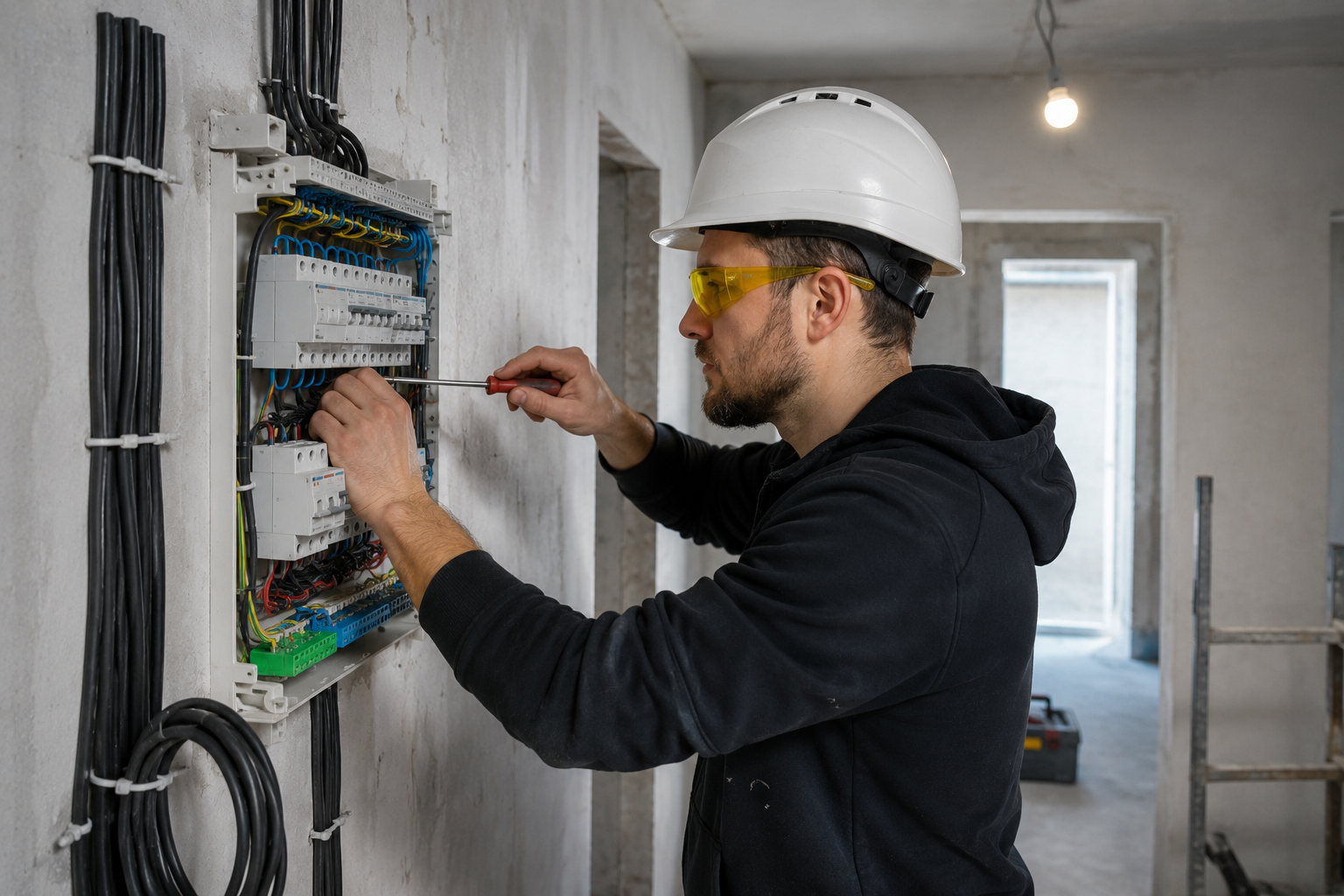
Advantages of Professional Electrical Installation Works
Our advantages include accuracy, meeting deadlines and high-quality execution. We guarantee reliable connections, operational safety and durability of the electrical system.
If you need professional electrical installation works, it is best to trust experienced specialists. SNV-Company offers a full range of services with guaranteed quality and a responsible approach to every project.
Our Benefits
Compliance with electrical safety standards and regulations
Accurate load calculation and proper equipment selection
Neat routing of cables and connections
Reliable protection against overloads and short circuits
Electrical Installation FAQ
In most cases, yes—especially in buildings with old aluminum wiring. Modern appliances require higher power capacity, and outdated electrical systems may not be able to handle the load.
Yes, during the design stage it is possible to include reserve circuits and additional connection points. This helps avoid modifications in the future when installing new equipment.
Absolutely. After the electrical installation is completed, all connections are inspected, protective circuit breakers are tested, and the entire system is checked before being put into operation.