
Drywall Structures
Drywall Structures
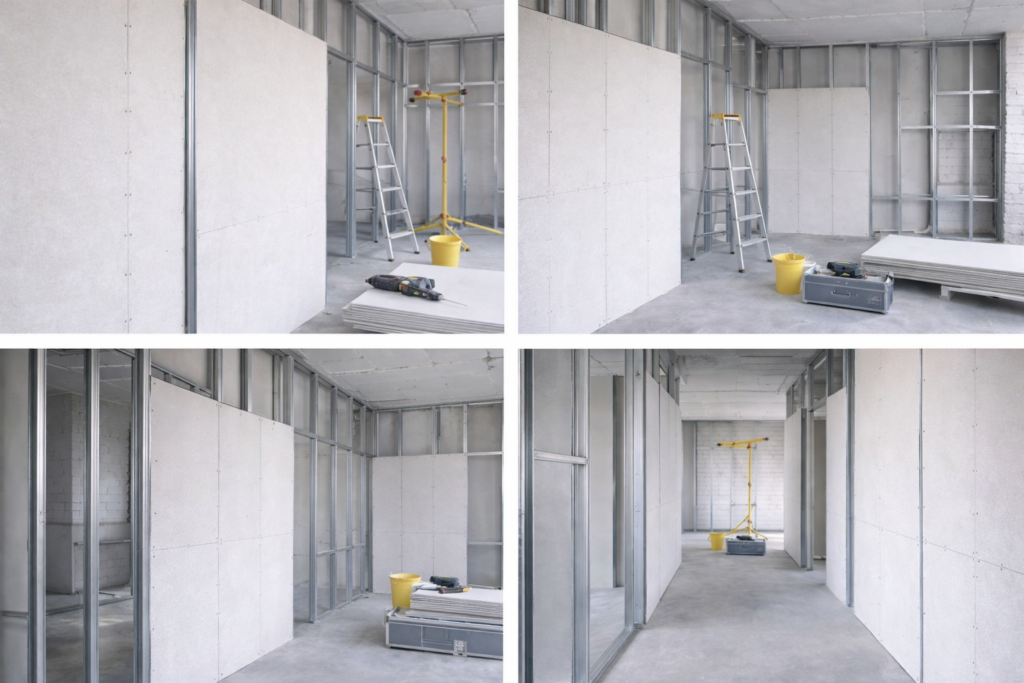
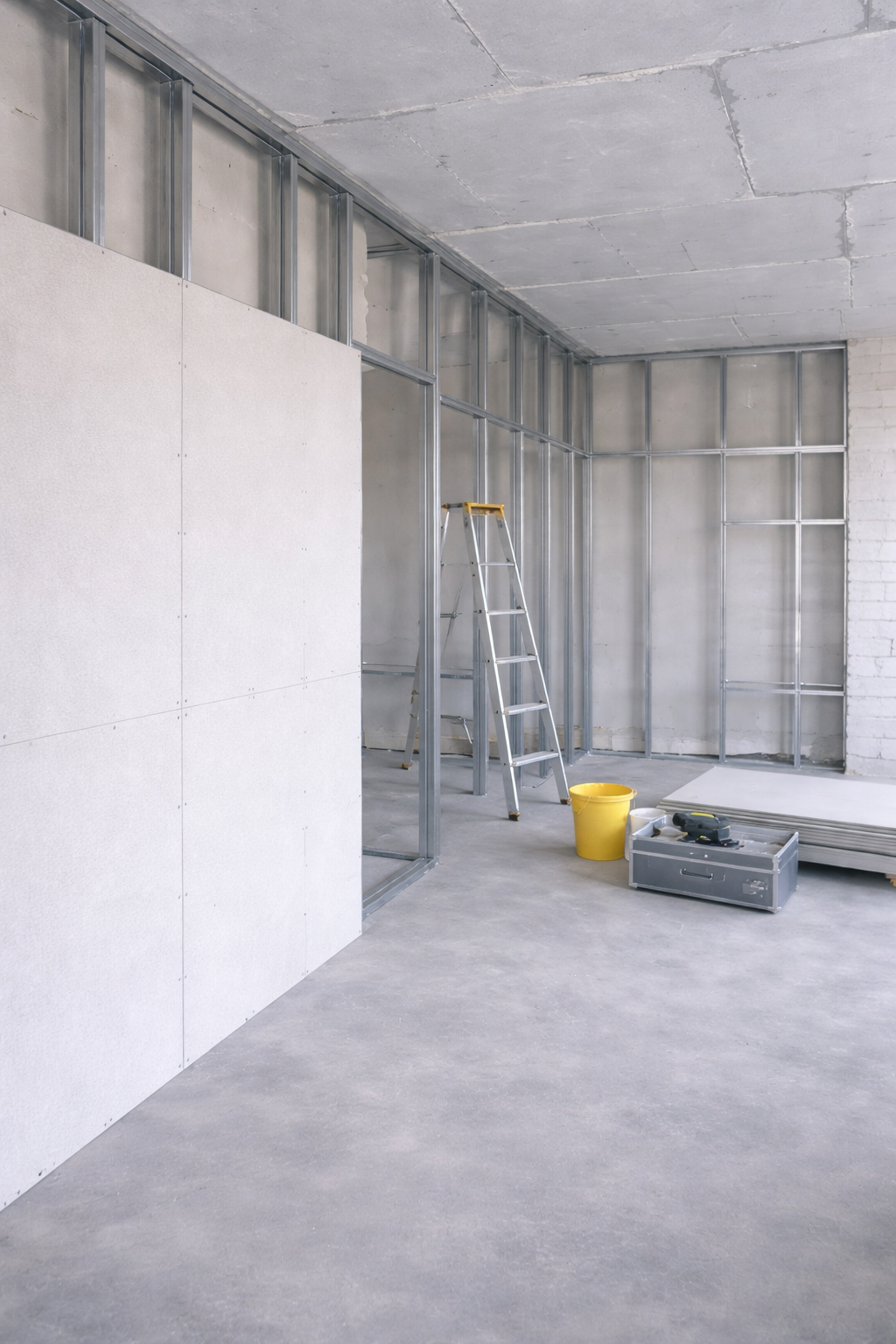
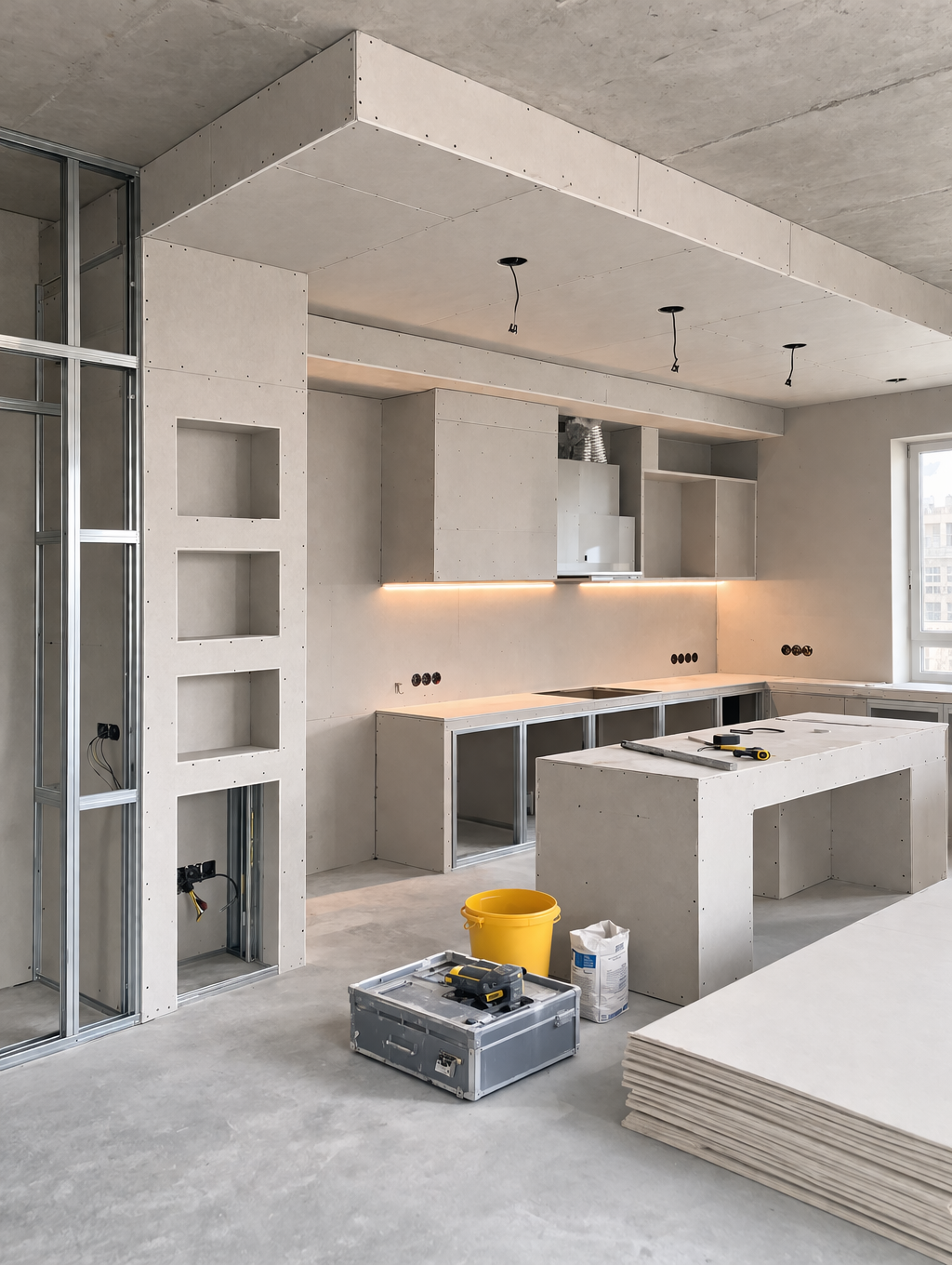
Drywall constructions are one of the most popular solutions in modern renovation and interior finishing. Thanks to the versatility and affordability of the material, it is possible to create drywall walls, partitions, niches, ceilings and complex design elements of any shape. This approach allows not only to zone the space but also to hide engineering systems, improve sound insulation and create a clean, finished interior.
Professional drywall installation is a crucial stage of finishing works that requires experience and precision. Mistakes during installation can lead to cracks, deformation and reduced durability. That is why drywall installation work should be performed by specialists. We provide a full range of services: from measurement and planning to монтаж and surface preparation for finishing. High-quality drywall panel installation ensures a perfectly smooth base for painting, wallpaper or decorative finishes.
Advantages of Professional Drywall Installation
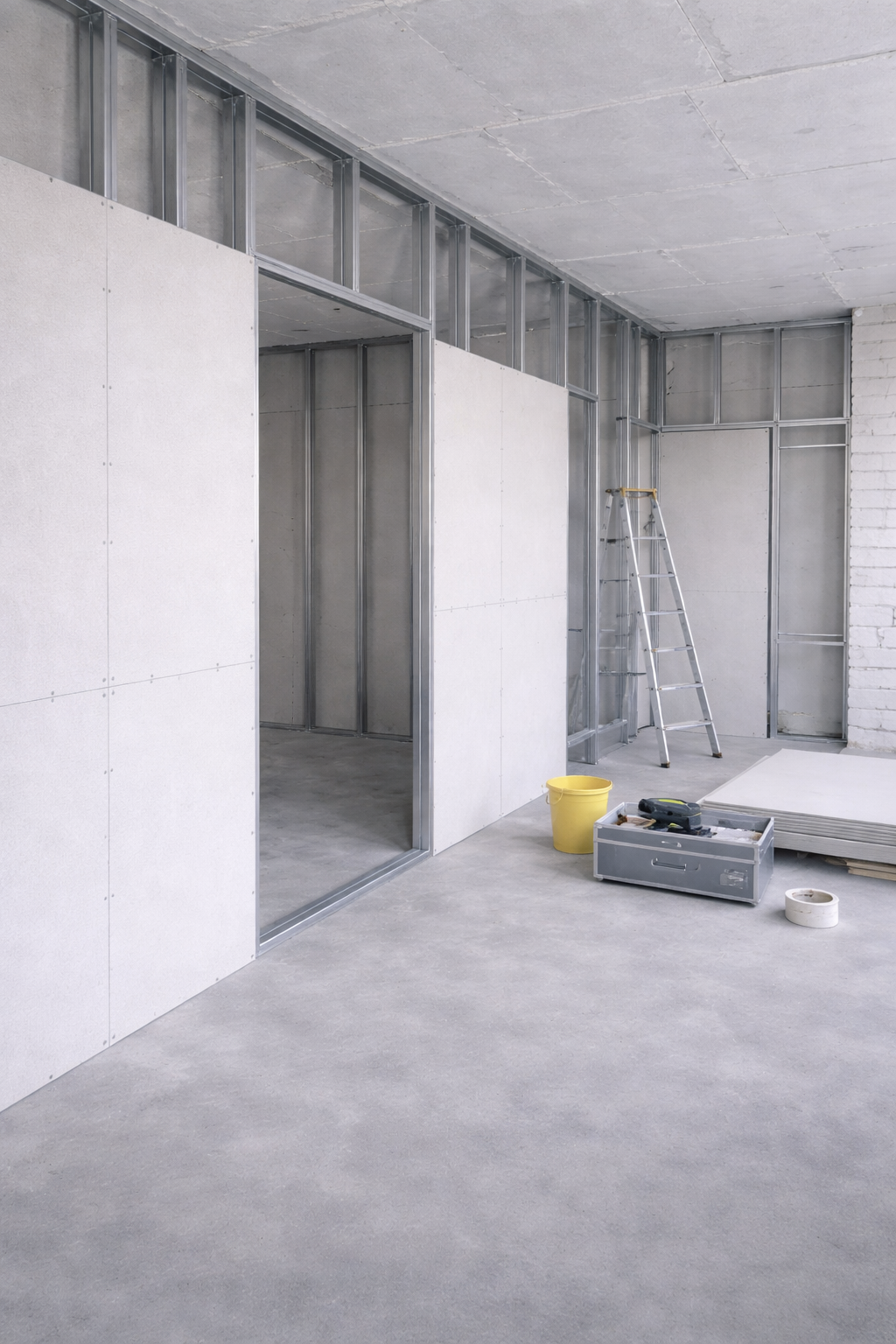
Special attention should be paid to drywall partition installation. This is an ideal solution for remodeling apartments, offices and houses without major construction work. Drywall partitions are lightweight but strong, easy to install and allow efficient zoning of space.
Our specialists create reliable and durable drywall constructions in accordance with all technical standards. We use only proven materials and modern equipment, which guarantees high-quality results. Each project is developed taking into account the specifics of the помещение and its future use.
If you need reliable drywall constructions, the best solution is to trust professionals. SNV-Company offers a full range of drywall installation services with quality guarantee.
Our Benefits
perfectly smooth drywall walls and precise geometry
professional drywall installation work according to all standards
accurate drywall partition installation with hidden communications
high-quality drywall installation with finishing preparation
Drywall Installation FAQ
Drywall constructions allow creating partitions, niches, ceilings and drywall walls for zoning and interior design.
With proper drywall installation, the constructions are strong, stable and long-lasting.
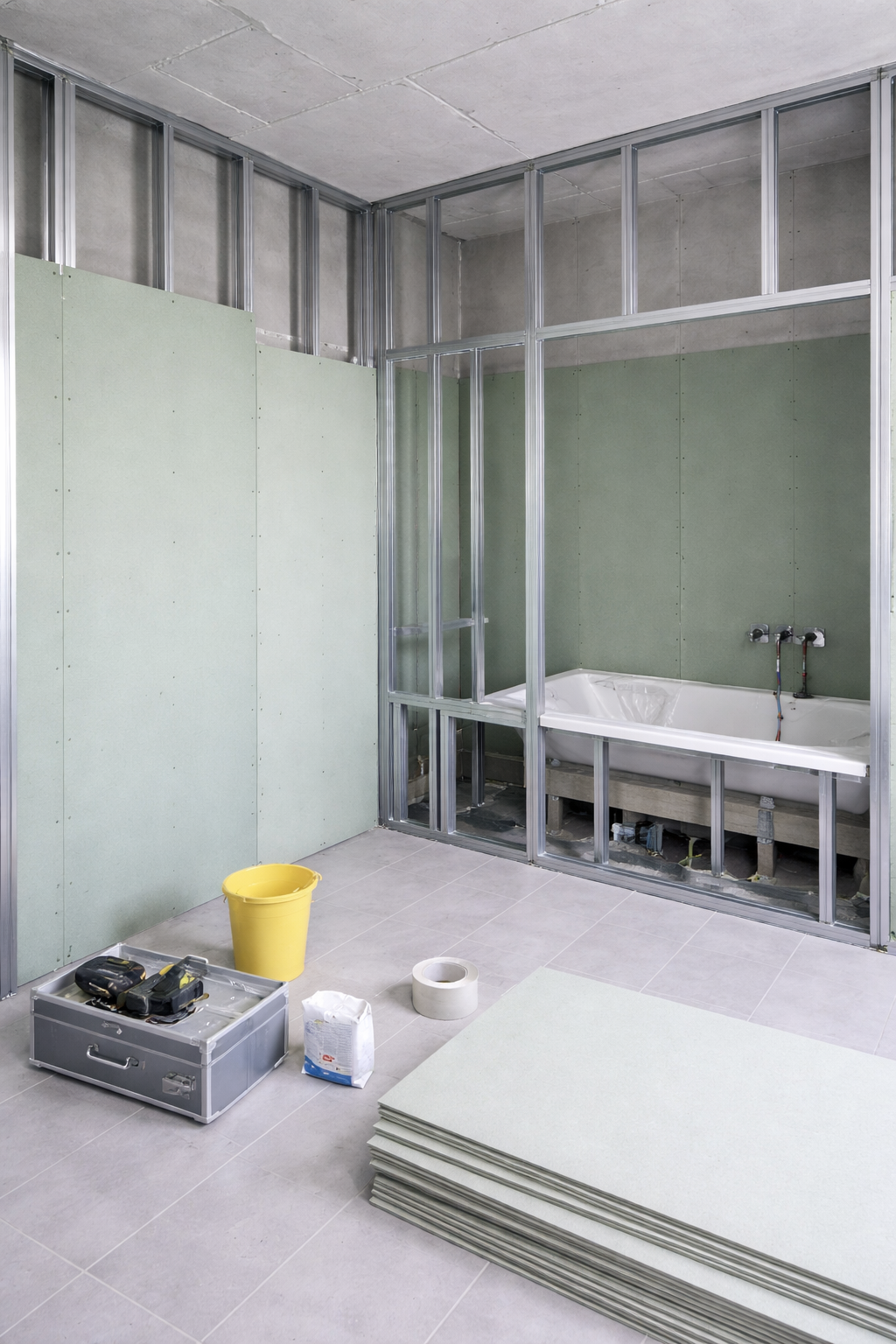
Yes, with moisture-resistant materials and proper drywall panel installation it can be used in bathrooms and kitchens.