

Electrical Installation Works
Electrical Services
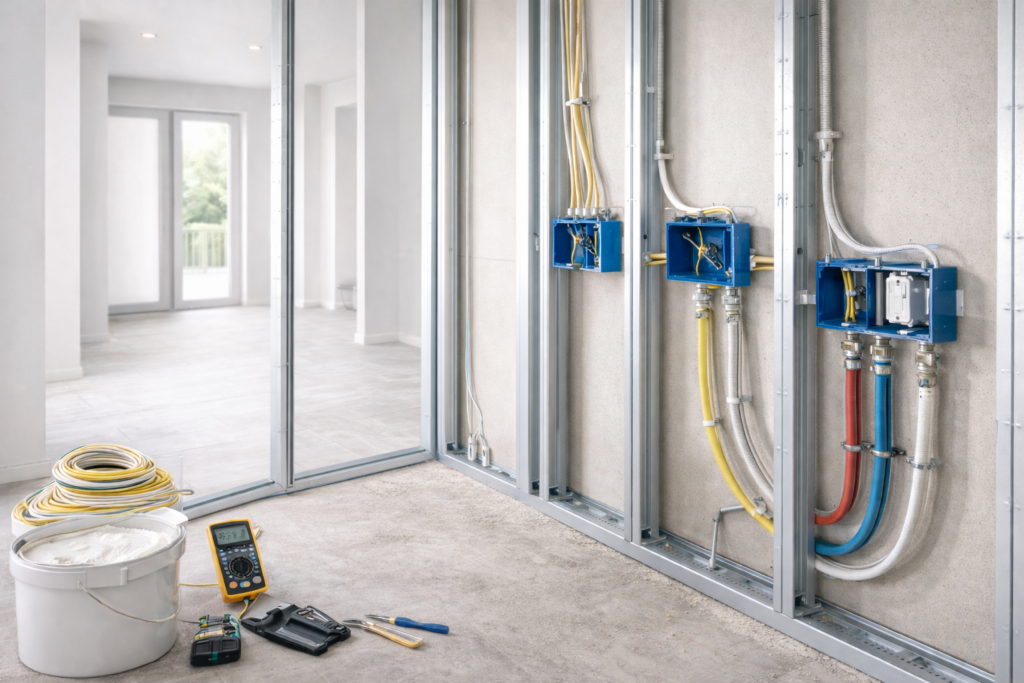
The electrical installation process begins with design and layout planning. The locations of sockets, switches, lighting fixtures, and junction boxes are determined with consideration for electrical load and ease of use. This is followed by cable routing, installation of electrical panels, circuit breakers, and grounding systems. All work is carried out in strict compliance with current regulations and safety standards.
Special attention is given to the selection of cables, circuit breakers, and protective devices. Properly executed electrical installation prevents cable overheating, short circuits, and equipment failure. After completion, the system is inspected and tested before being put into operation.



Advantages of Professional Electrical Installation Works
Professional electrical installation works are the key to safety, reliability, and comfortable use of the premises. High-quality electrical installation eliminates the risk of failures, ensures stable operation of equipment, and complies with all technical requirements. Choosing experienced specialists provides confidence in the result and peace of mind for many years.
Our Benefits
Compliance with electrical safety standards and regulations
Accurate load calculation and proper equipment selection
Neat routing of cables and connections
Reliable protection against overloads and short circuits
Electrical Installation FAQ
In most cases, yes—especially in buildings with old aluminum wiring. Modern appliances require higher power capacity, and outdated electrical systems may not be able to handle the load.
Yes, during the design stage it is possible to include reserve circuits and additional connection points. This helps avoid modifications in the future when installing new equipment.
Absolutely. After the electrical installation is completed, all connections are inspected, protective circuit breakers are tested, and the entire system is checked before being put into operation.